
Commercial concrete repair in Louisville: a winter checklist for property managers
American Concrete handles commercial concrete repair and replacement for property managers, business owners, offices, storefronts, churches, and HOAs. As a division of American Group, LLC—family run since 2008 and fully insured—we use our own crews, ask for no money upfront, and provide free in-person estimates with pricing in writing. Serving Louisville, Elizabethtown, and surrounding Kentucky counties, you can reach us at (502) 410-4080 to walk your property and prioritize what needs attention now versus what can wait for spring.
Walk your lot: the four things to check
Exterior concrete around Louisville faces wet freezes every winter. Walking your sidewalks, entries, curbs, and aprons before or during cold weather lets you separate active safety hazards and drainage problems from cosmetic wear that can go on a planned spring list. Check these four areas as you make a loop around the building and parking lot:
- Trip hazards: what is urgent
- Spalling and scaling: what salt and freeze-thaw do to existing concrete
- Curbs, gutters, and ramps
- Aprons, drainage, and ponding
Trip hazards: what is urgent
Start with every pedestrian route: front entries, steps, stoops, landings, and main walkways between the parking lot and doors. One panel that heaves a little each winter can turn into an edge where a customer, tenant, or employee catches a toe. Entry steps and landings are common commercial repair items because damage there creates an immediate safety concern.
As you walk, look for clear warning signs rather than normal hairline shrinkage cracks that stay level along a control joint:
- One side of a crack or joint sitting higher than the other
- Cracks wider than a typical pencil
- Panels that rock or sound hollow when you step on them
- Cracked, settling, or crumbling entry steps and landings
- Walkway corners or edges breaking apart under vehicle or equipment traffic
Knowing why a slab moved matters as much as the repair itself. Around Louisville, sidewalk panels commonly lift or sink because tree roots push from below, water washes out or freezes under the base, downspouts keep the same section wet year after year, or delivery trucks and heavy equipment crack concrete built for foot traffic. Fixing only the surface without addressing roots, base support, or drainage invites the same failure back.
When a panel is still in one solid piece, does not rock underfoot, and the cause has stopped, a targeted repair may be enough. Small chips on steps can sometimes be patched, and stable narrow cracks can be cleaned and sealed with a flexible sealant to keep water out. When a panel is broken into pieces, crumbling at the edges, rocking, still moving, or failing after previous patches, cutting out and replacing that section—and fixing the base underneath—is the lasting fix. For a closer look at that decision, see our guide on sidewalk trip hazards: repair or replace, our overview of why concrete cracks and what to do about it, and our pages for concrete flatwork and sidewalks and ADA ramps and accessible routes.
Spalling and scaling: what salt and freeze-thaw do to existing concrete
De-icing salt keeps walkways safer underfoot during winter storms, but it also pulls moisture through concrete. When water enters the slab and freezes, it expands. Salt makes that freeze-thaw cycle harder on the surface, which can leave flaking, a rough pitted texture (surface scaling), or deeper spalling and crumbling along edges and joints. Slab age, salt use, plow impact, and standing water all influence how quickly a surface wears down.
Not every rough slab has to come out right away. Light surface scaling that is purely cosmetic can often be monitored and added to a planned spring repair list. Where the underlying concrete is still solid and stable, surface scaling from salt can sometimes be resurfaced, and narrow stable cracks can be cleaned and sealed so water stops feeding the base underneath.
Replacement becomes the right option when spalling creates a trip edge, leaves a panel rocking, or occurs on concrete that has sunk, heaved, broken into pieces, or slopes water toward the building. A thin overlay will not hold on concrete that is still moving or sitting on a wet, washed-out base.
When sections do need replacement, American Concrete cuts out the damaged concrete at control joints so the repair looks intentional, corrects the base underneath, dowels into the existing slab where needed, and pours to match the surrounding grade and finish. New concrete starts out lighter than aged concrete and weathers over time, and cutting neatly at joints while matching the finish helps the new section blend in. If you recently poured new concrete on your property, see protecting new concrete from salt for first-winter care.
Curbs, gutters, and ramps
Parking lot edges take heavy winter wear from snowplows, delivery vehicles, and salt runoff. Walk the perimeter of your lot and check curb islands, wheel-stop edges, curb-and-gutter lines, and the transitions where sidewalks meet the parking lot or street. Broken curb faces, missing chunks, and cracked or uneven ADA curb ramps are easy to overlook during a quick drive-through but show up clearly on foot.
Concrete curbs and ramps also tie directly into the performance of your parking lot surface. Broken curb edges and ponding on connected asphalt can feed water beneath adjacent sidewalks and aprons, accelerating freeze-thaw damage along the perimeter. American Concrete forms and replaces commercial curbs, curb and gutter, parking lot curbs and islands, and ADA curb ramps with landings and warning panels—and we can evaluate sidewalks, curbs, and ramps during the same site visit. When the asphalt side of the lot needs work too, our sister division American Paving handles asphalt patching and parking lot repair, sealcoat or replace. See concrete curbs and gutters, ADA ramps and accessible routes, and concrete repair and replacement for full concrete scopes.
Aprons, drainage, and ponding
Pay close attention to where water goes during a rain or thaw. Check driveway aprons, service entrances, dumpster pads, threshold slabs, and low sections of walkway where water collects and refreezes overnight. If water drains toward a building line or door, or sits in low spots along an apron or walk, the base under the concrete stays saturated and unstable through freeze-thaw cycles.
Look for practical drainage causes while you walk:
- Downspouts discharging directly onto a sidewalk, pad, or apron without extensions or splash blocks
- Aprons or slabs tilting back toward a building, garage, or entry door
- Dumpster pads or service aprons cracking at the edges under heavy loads
- Ponding on adjacent asphalt or landscape beds feeding water under the edge of a walk
- Open joints or widening cracks letting surface runoff reach the base below
Keeping water moving away from concrete protects both existing slabs and future repairs. Extending downspouts, keeping control joints clean and sealed where appropriate, and correcting base support and slope when replacing failed sections prevent new concrete from failing for the same reason. See concrete driveways and aprons for apron and parking pad work.
What needs attention now and what can wait for spring
Winter triage comes down to separating active hazards from cosmetic wear so you can spend maintenance budget where it matters first:
- Address right away: Raised or sunken sidewalk panels that could trip someone, cracked or settling entry steps, rocking or broken slabs on active walkways, and areas where water is running toward a foundation or building line. If someone could trip on a panel right now, mark it clearly and call for an evaluation.
- Monitor and schedule for spring: Hairline cracks that follow control joints and remain level on both sides, and light cosmetic surface scaling that creates no trip edge or drainage problem.
Start dates for concrete repair depend on the season, the weather, and our schedule. Calling when you spot a problem lets us walk the site in person, tell you plainly whether a section should be marked and addressed as soon as weather allows, sealed, replaced, or left alone, and put a written estimate in your hands for planning.
How to document damage and plan the repair
Keeping a simple record of your winter walk makes budgeting, contractor walkthroughs, and maintenance tracking much easier. The steps below are general property-management record-keeping practices, not legal advice:
- Build a dated photo log: Take one wide photo showing the surrounding landmark (entrance door, parking row, building corner) and one close-up photo showing the crack, lip, spalling, or broken curb.
- Map exact locations: Note each spot on a basic site sketch or numbered list so your team and contractor inspect the same panels and curb runs.
- Group by priority: Separate immediate trip and entry hazards, water draining toward a building, and cosmetic wear slated for spring.
- Note history and runoff: Write down whether a spot has been patched before, whether a downspout empties nearby, or whether water pools there after rain or snowmelt.
When you gather written estimates, compare scopes on the same basis. Repair cost generally depends on how many sections or linear feet are involved, whether stable concrete can be sealed or resurfaced versus cut out and replaced, what base or drainage work is needed underneath, site access and phasing around active doors, and whether curbs, steps, or ADA ramps are grouped into the same visit.
How repair is done on an open property
Many of our commercial repair jobs are at active storefronts, offices, churches, and HOA properties that stay open while work is underway. Our own crews handle the job from demolition through finishing—we do not ask for money upfront, and we provide copies of our insurance policy on request.
On an occupied site, we barricade the work area, keep an entrance open whenever possible, and schedule the pour so the repaired section can reopen as soon as it is safe. Cutting damaged concrete at existing joints keeps the work area clean and contained while rebuilding the base and matching surrounding grades and finishes.
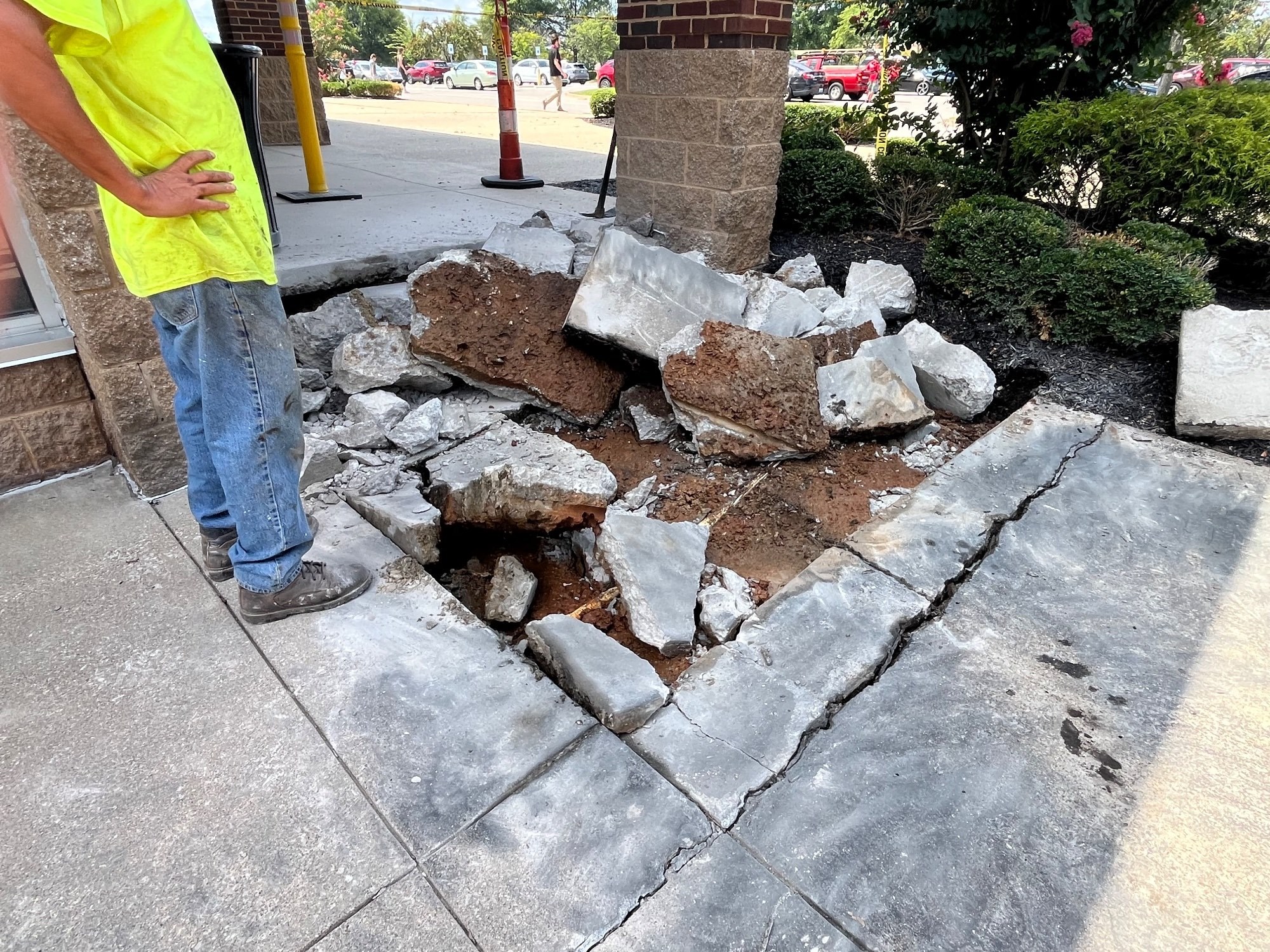
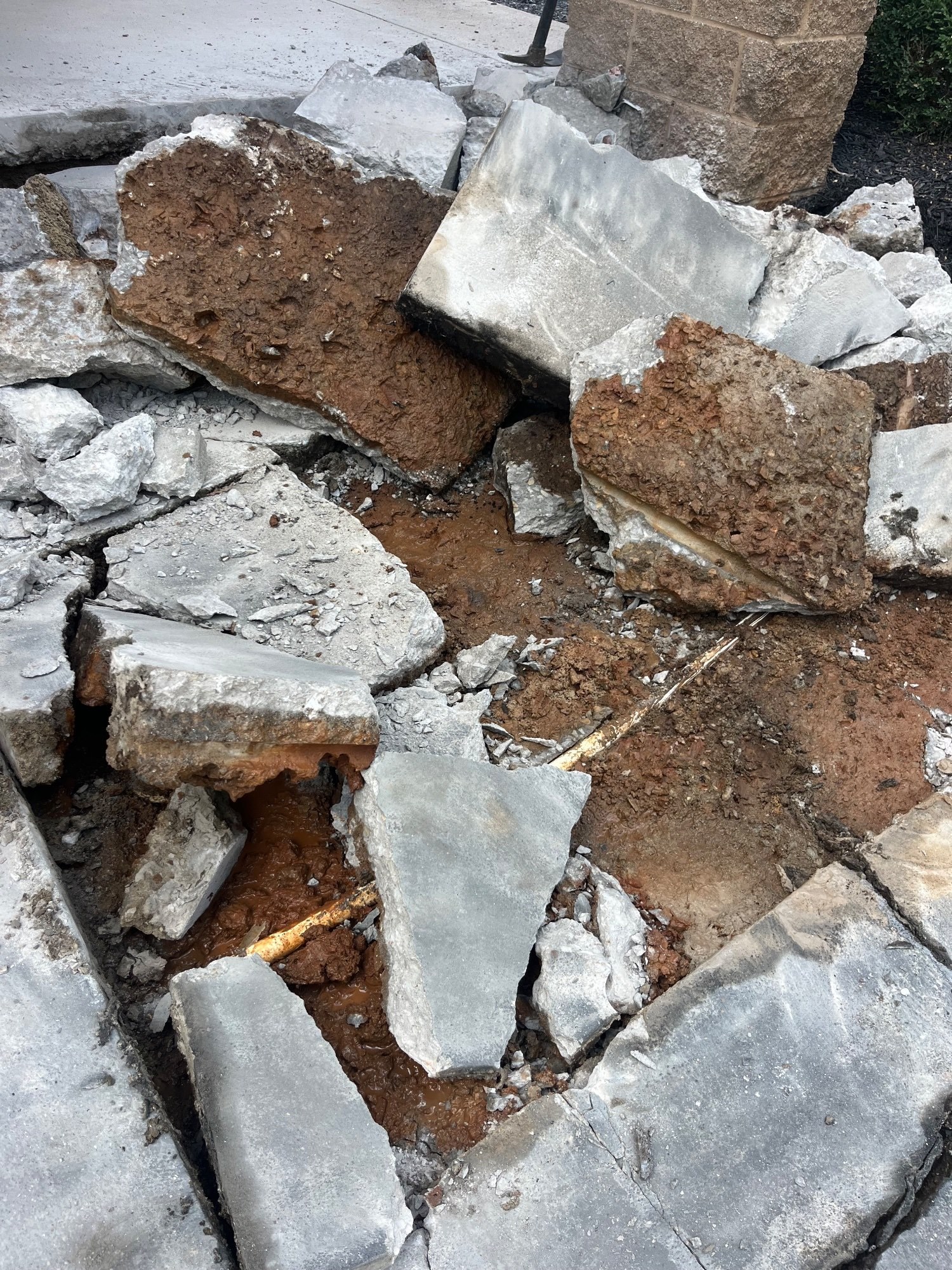
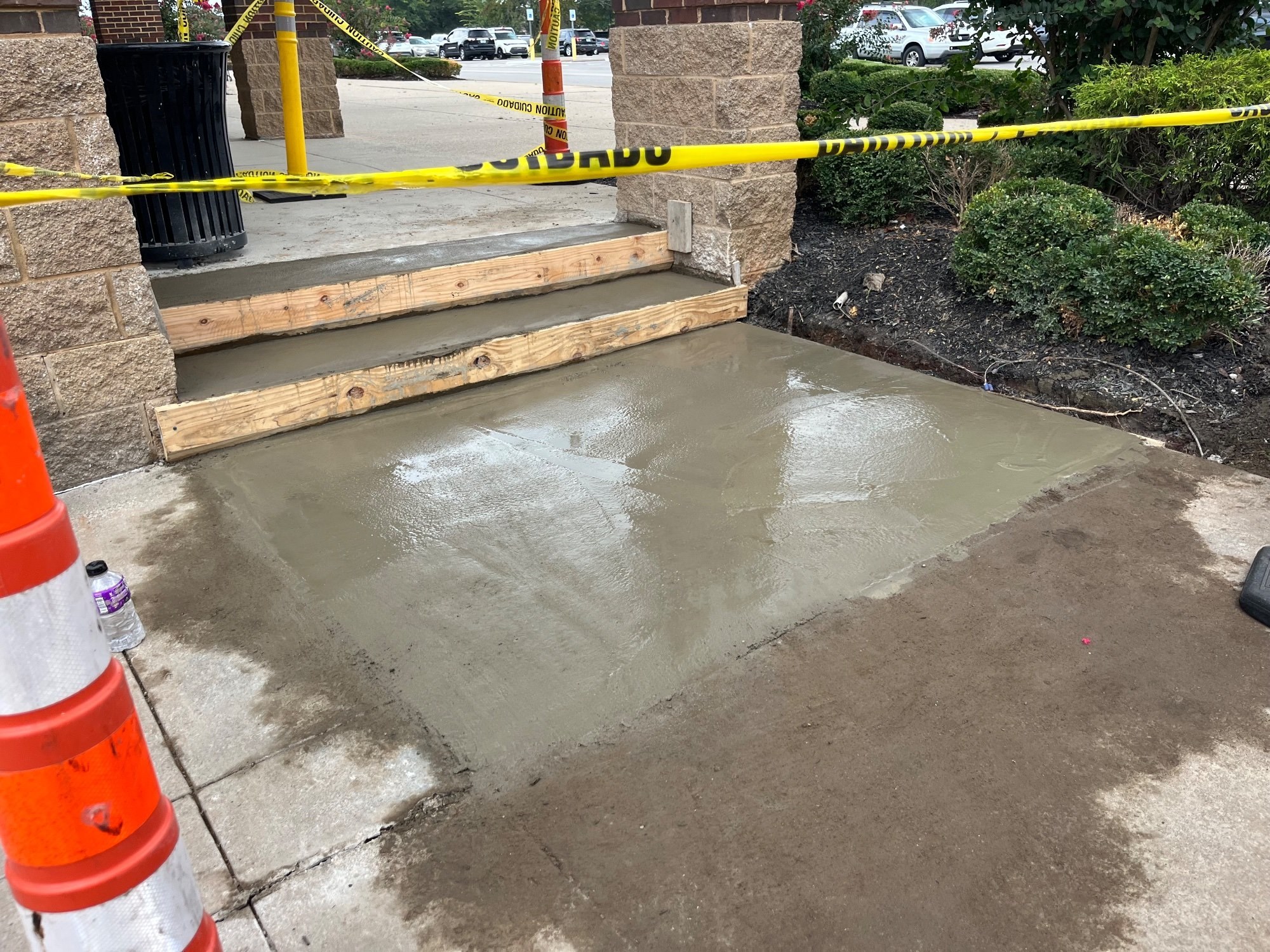
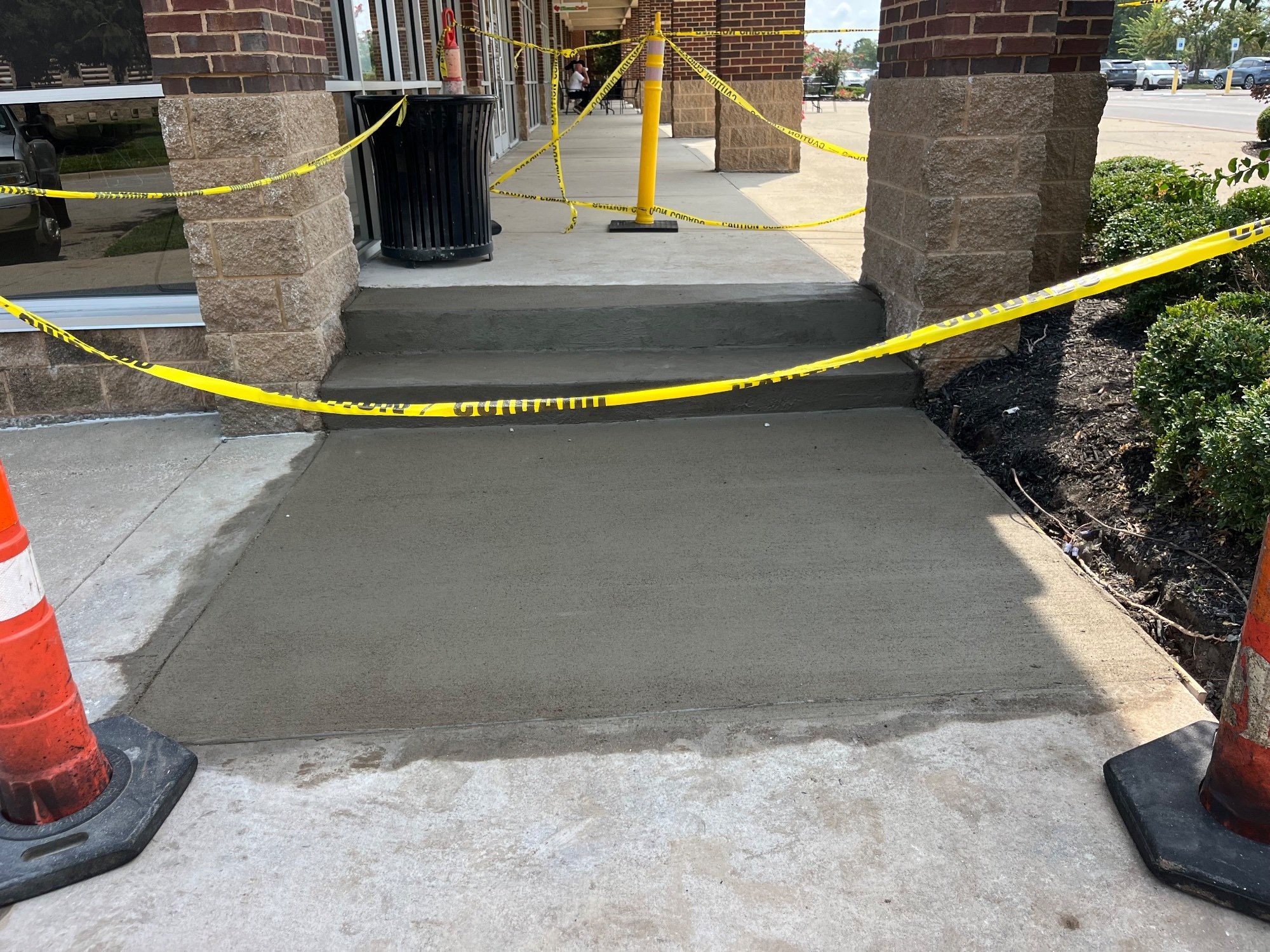
Repairs we have done
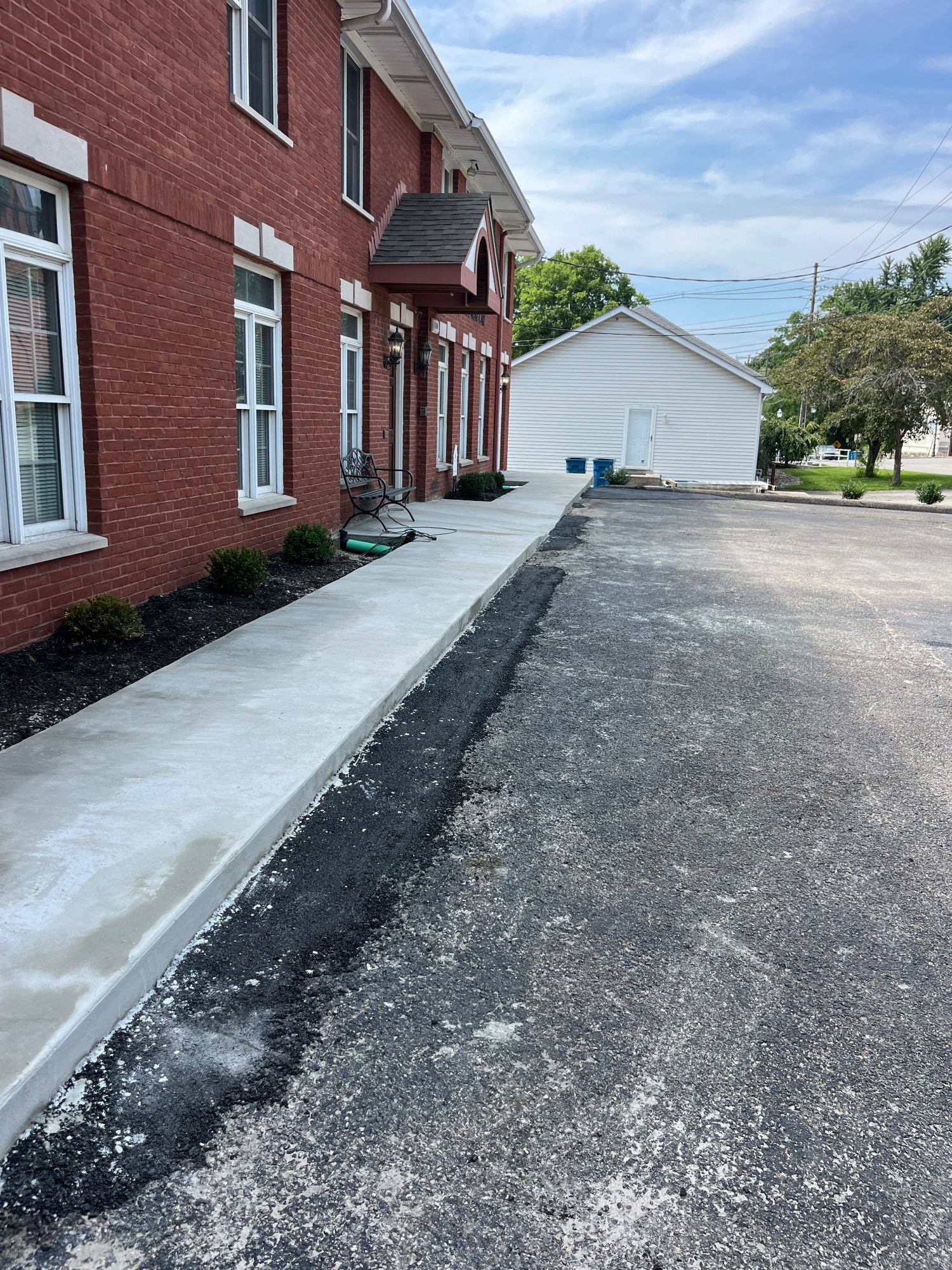
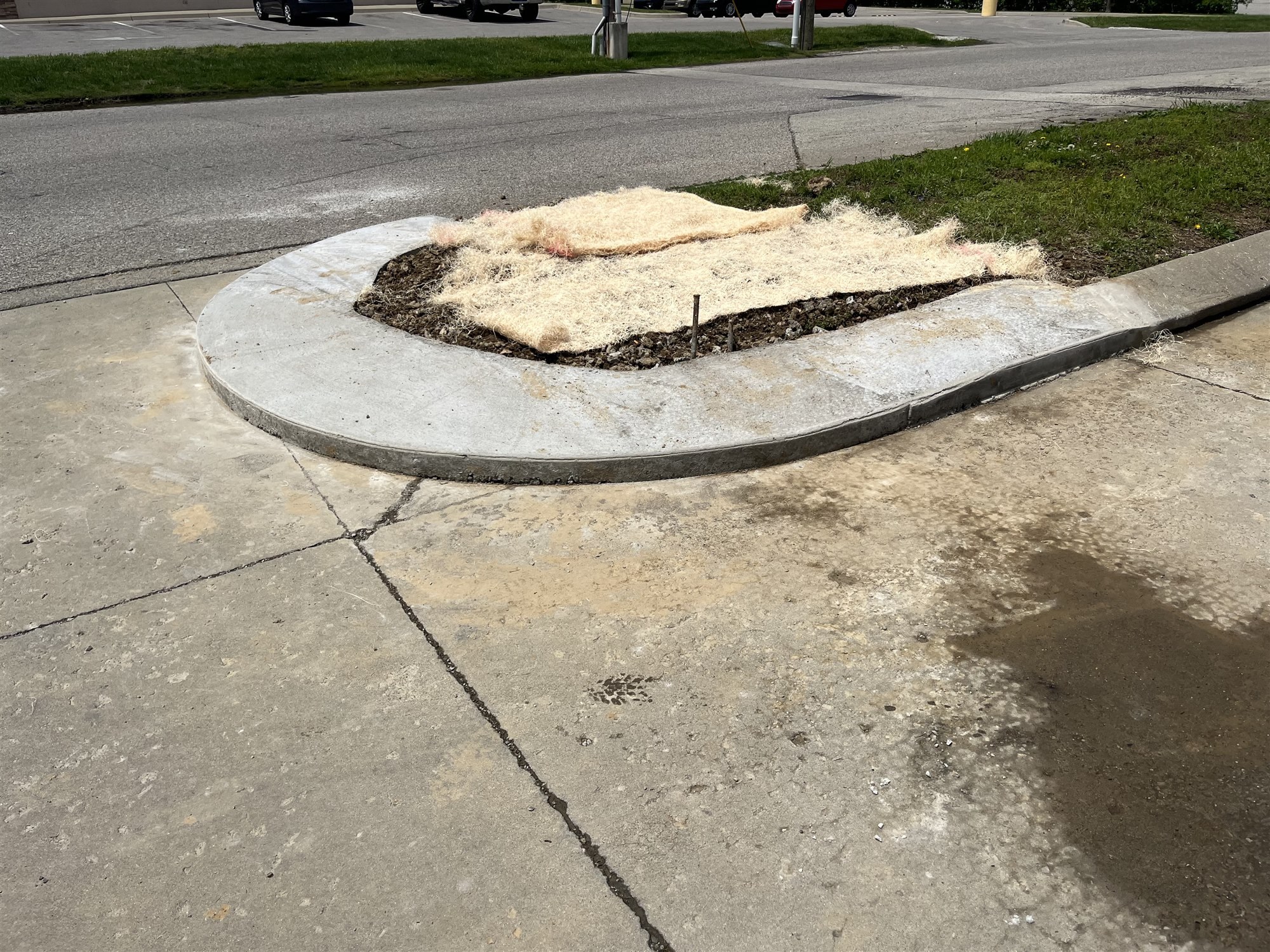
Frequently asked questions
How do I tell a trip hazard I must fix now from cosmetic damage?
Thin hairline cracks that follow control joints and stay level on both sides, along with light surface scaling, are often cosmetic and can be monitored. A raised or sunken panel, one side of a crack higher than the other, a panel that rocks or is broken into pieces, cracked or settling entry steps, or water draining toward a building should be marked and evaluated right away.
What is spalling or scaling, and does road salt cause it?
Surface scaling is flaking or roughness on the top layer of a concrete slab, while spalling is deeper pitting or crumbling at the surface or along edges. When water enters concrete and freezes, it expands, and de-icing salt pulls moisture through the concrete and makes the freeze-thaw cycle harder on the surface. Slab age, salt use, plow impact, and standing water all contribute.
Can spalled or scaled concrete be repaired, or does the slab have to be replaced?
Surface scaling from salt can sometimes be resurfaced if the concrete underneath is sound, and stable cracks can be cleaned and sealed to keep water out. Slabs that have sunk, heaved, or broken into pieces usually need to be cut out and replaced because a thin overlay will not hold on concrete that is still moving. American Concrete inspects damaged concrete in person for free and puts the options and price in writing.
Should I call in winter or wait until spring for commercial concrete repair?
If a panel or entry step is unsafe, someone could trip on it now, or water is running toward a foundation, mark the area and call now. Cosmetic surface wear and planned work can often wait for a spring repair list. Start dates depend on the season, the weather, and our schedule, and we walk through timing during your free in-person estimate.
What about broken curbs, ramps, and aprons around the lot?
American Concrete forms and replaces commercial concrete curbs, curb and gutter, parking lot curbs and islands, ADA curb ramps, and concrete aprons, and we can inspect sidewalks, ramps, curbs, and aprons during the same site visit. If ponding or damaged asphalt on the connected parking lot is feeding water under the concrete, our sister division American Paving handles asphalt patching and parking lot repair.
What should I document before scheduling commercial concrete repairs?
As general record-keeping rather than legal advice, it helps to take dated wide and close-up photos of each damaged spot, note the exact location on your property, separate safety hazards from cosmetic wear, and record any prior patches or water runoff at that area. Bringing that list to an on-site walkthrough makes it easier to prioritize work and compare written estimates.
Request a repair estimate
Need a straight read on a commercial sidewalk, entry step, curb, ramp, or apron? American Concrete is a division of American Group, LLC, family run since 2008 by three siblings. We are fully insured, our own crews do the work, and we do not ask for money upfront. Estimates are free: we inspect the concrete in person, review your options, and put the price in writing.
We serve Louisville (Jefferson County), Elizabethtown and Radcliff (Hardin County), Shepherdsville and Mount Washington (Bullitt County), Bardstown (Nelson County), and the I-65 corridor—and we travel for the right project. Call (502) 410-4080, text (502) 586-5899, email sales@americangroup.pro, or send your details online.
Request a free estimate Call (502) 410-4080
Service area overview: Louisville, KY concrete services.